


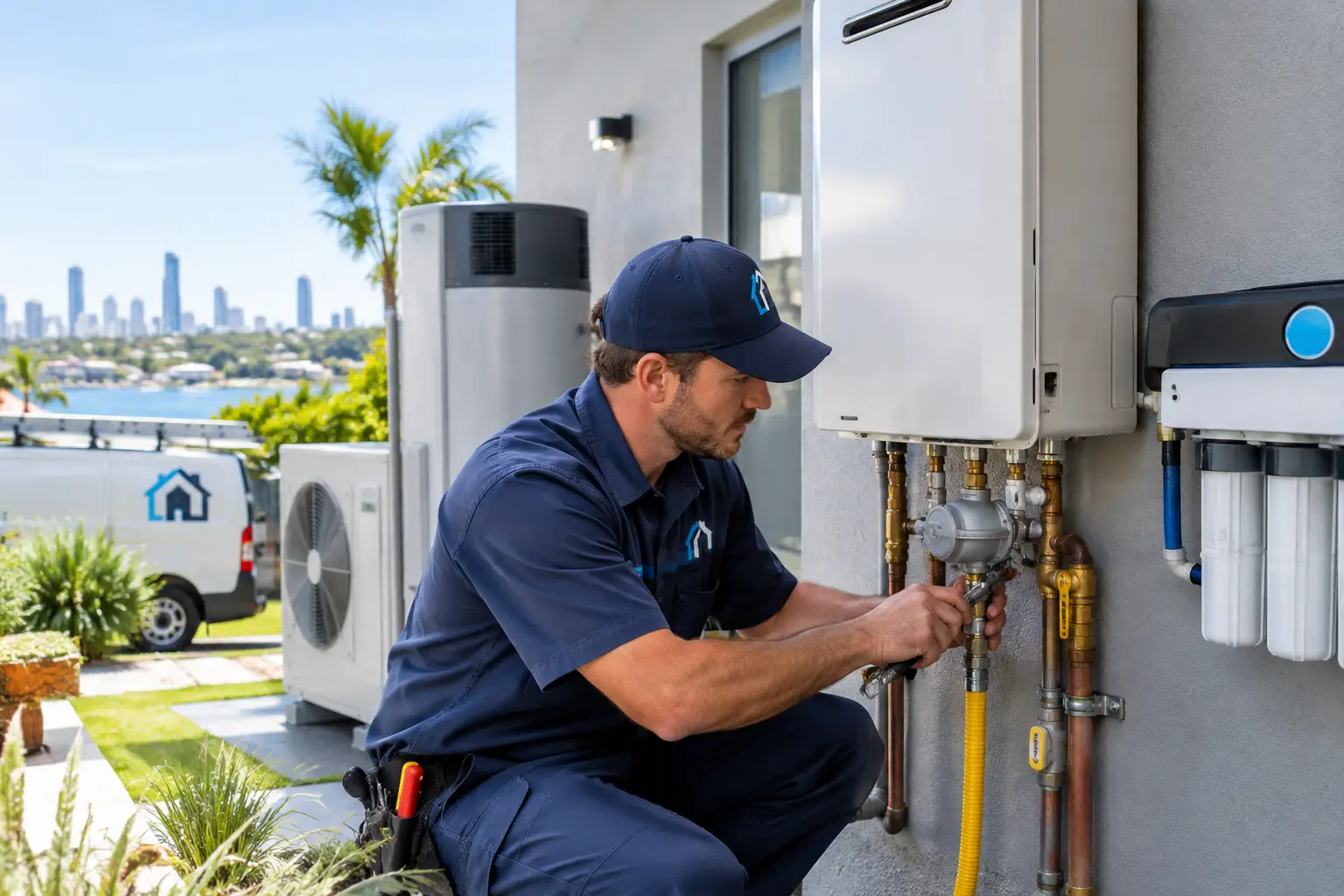
A cooktop that suddenly has a weak flame, a gas hot water system that will not stay running, or a gas bottle that seems full but delivers very little can quickly disrupt the household. Gas regulator troubleshooting starts with recognising what you can safely observe from the outside, then knowing when to stop and call a licensed gas fitter. A regulator is a safety-critical part of your LPG setup, so it is never something to pull apart, modify or force back into operation.
What a gas regulator does
Your LPG bottle stores gas at high pressure. The regulator reduces that pressure to the level your cooktop, hot water system or gas fire needs to operate safely and consistently. It also helps keep the gas supply steady as appliances turn on and off.
When a regulator is faulty, damaged, incorrectly connected or affected by an issue elsewhere in the system, the signs can look similar to an empty bottle. Low flame, unreliable hot water and appliances cutting out are frustrating, but they do not automatically mean the regulator has failed. The bottle may be low, an appliance may have its own fault, or the gas line and connections may need professional attention.
That distinction matters. Replacing parts at random can waste time and money, while overlooking a leak or damaged connection can create a genuine safety risk.
Start with safety, not gas regulator troubleshooting
If you smell gas, hear hissing near the bottle or regulator, or suspect a leak, do not test appliances or try to find the source with a flame. Turn off the gas supply at the cylinder valve only if it is safe to do so. Keep people away from the area, avoid using electrical switches, and do not start vehicles nearby.
Move to a safe location and call for qualified help. If there is an immediate danger, fire or strong gas smell that cannot be safely controlled, call 000. Never use soapy water, tools or repeated attempts to reconnect a fitting when there is an active leak concern. A licensed gas fitter can inspect the system properly and make any required repair.
Even when there is no smell of gas, leave the following jobs to a professional: removing the regulator, dismantling it, changing hoses, repairing valves, adjusting pressure settings or working on fixed gas pipework. LPG is safe when the system is installed and maintained correctly. Guesswork is not part of the job.
Safe checks you can make from the outside
Before assuming there is a regulator problem, turn off all gas appliances and check the simple things you can see without touching fittings or taking anything apart.
First, consider the gas level. A bottle can feel as though it still has gas in it while being too low to support normal appliance use, particularly when several appliances are running. If you have a second bottle, check whether the changeover indicator shows the service bottle is empty, or arrange a replacement bottle.
Next, look at the cylinder position. LPG bottles should remain upright on a firm, ventilated surface. Do not lay a bottle down, bring it inside or attempt to warm it with hot water, a heater or any other heat source. If the bottle has been knocked, is badly corroded or the valve appears damaged, stop using it and arrange professional advice.
You can also visually check that the regulator is connected as intended and has not been struck or pulled out of position. Do not tighten it with tools. On many installations, the regulator vent should face downward so moisture and debris do not enter it. If the vent is blocked by dirt, insects, paint or garden material, do not poke anything into it. Have it assessed.
Finally, think about timing. Did the problem start immediately after a bottle change? Did it appear during heavy appliance use, after prolonged rain, or only with one appliance? Those details help a gas fitter narrow down whether the issue is supply-related, regulator-related or appliance-related.
Common signs and what they may mean
Weak flames or poor appliance performance
A weak cooktop flame or slow-to-heat hot water can point to a low bottle, restricted gas flow, a regulator issue or a fault within the appliance. If every gas appliance is affected, the bottle, regulator or supply line is more likely to be involved. If only one appliance is struggling, the appliance itself may be the cause.
Avoid trying to compensate by altering appliance controls beyond their normal settings. A yellow, lazy or uneven flame also needs attention from a qualified technician. Gas appliances should generally produce a stable blue flame, although the exact appearance can vary by appliance.
The regulator or bottle is icy
Frost on an LPG bottle or regulator can happen when gas is being used quickly. As liquid LPG turns into vapour, it draws heat from the surrounding air. A light amount of frosting in cool or humid conditions is not always a fault.
Heavy icing combined with poor gas flow is different. It may mean the bottle is being asked to supply more gas than it can vaporise under the conditions, the bottle is low, or there is a restriction in the system. Turn off appliances and let the equipment return to ambient temperature naturally. Never apply heat. A gas fitter can advise whether the setup needs adjustment, a different cylinder arrangement or further inspection.
Gas supply cuts out after a bottle change
If an appliance will not run after a bottle swap, first make sure the bottle valve has been opened correctly and the bottle is suitable for the installation. Some systems include safety features that restrict flow if a valve is opened too quickly or if the system detects an abnormal demand.
Do not repeatedly force the valve, disconnect and reconnect fittings, or keep resetting the system. Turn appliances off and contact your gas supplier or a licensed gas fitter for advice. A quick phone call is safer than turning a small issue into a period without hot water or cooking.
Hissing, damage or a gas smell
Treat these signs as urgent. Hissing can indicate escaping gas, while cracked hoses, a bent regulator body, corrosion or damaged fittings need professional inspection. The same applies if a bottle has been exposed to impact, flooding or excessive heat.
When to call a licensed gas fitter
Call a professional straight away for any suspected leak, repeated supply failure, visible damage, abnormal flame behaviour or regulator icing that affects appliance operation. It is also wise to book an inspection if the regulator is old, has been exposed to weather for years, or the problem returns after a fresh gas bottle is connected.
A licensed gas fitter can test gas pressure, inspect the regulator and hose, check the cylinder connection and assess the appliances themselves. This is the practical way to find the real cause rather than replacing a part that may not be at fault.
For households across the Gold Coast, a gas delivery team with qualified gas fitters can be particularly useful. If a problem is found during delivery, the right person may be able to assess it on the spot, reducing the runaround between a gas supplier and a separate trade.
Keep your LPG system dependable
Most regulator problems are easier to avoid than to diagnose in a hurry. Keep the cylinder area clear, dry and well ventilated. Protect the bottle and regulator from knocks, lawn equipment and stored items, but never enclose the setup in a way that traps gas.
Plan gas deliveries before the bottle runs completely empty, especially if your home relies on LPG hot water. A timely bottle change helps avoid the uncertainty of trying to work out whether low pressure is a supply issue or a mechanical fault. If your home has two bottles, learn which one is in service and how your changeover arrangement works.
It also helps to note the age of your regulator and hose, along with any past repairs. When you call for service, clear information about the symptoms and when they began can speed up the diagnosis.
A gas system should make home life easier, not leave you guessing. If the supply does not feel right, trust that instinct, stop using the affected appliance and get qualified help before a small interruption becomes a bigger hassle.