


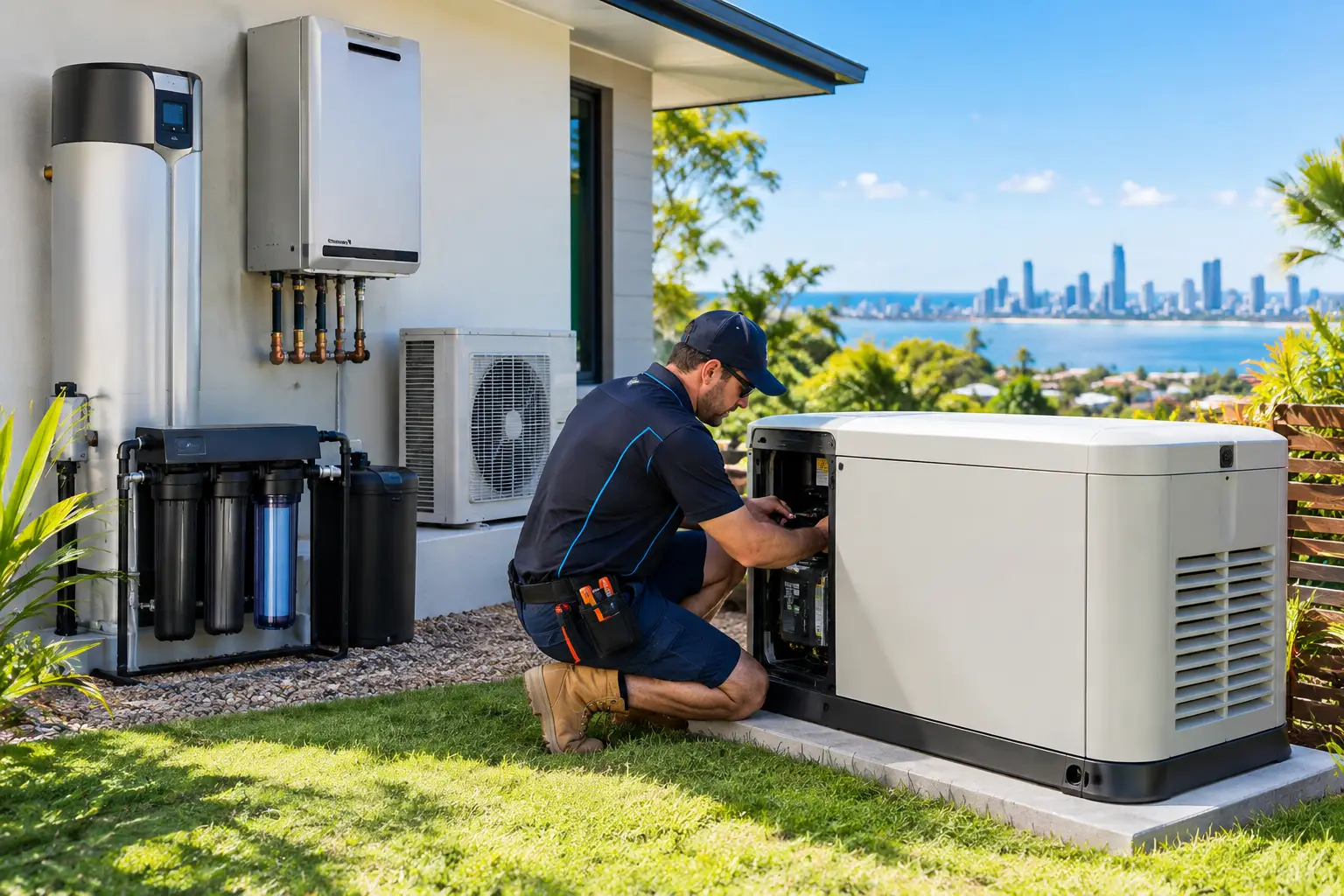
A blackout changes the way a house feels very quickly. The lights are out, the fridge starts warming up, the Wi-Fi drops and, if you rely on an electric pump, air conditioning or essential medical equipment, the disruption can become much more serious. A professionally planned Gold Coast generator installation gives your household a dependable backup option without the stress of scrambling for extension leads when the weather turns.
The right system is not necessarily the biggest one. It is the generator, connection method and circuit plan that suit your home, your priorities and the way you want backup power to work.
Start with what you need to keep running
Most households do not need to power every appliance during an outage. Choosing essential circuits keeps the system more affordable, reduces generator size and avoids wasting power on things that can wait.
For many Gold Coast homes, essential backup power may cover the fridge and freezer, a few lights, internet equipment, selected power points, a garage door, security system and one or two fans. Some households will also need a bore or rainwater pump, pool equipment on a limited basis, medical equipment or a home office.
High-demand appliances change the equation. Ducted air conditioning, electric hot water, ovens, clothes dryers and multiple induction cooking zones can require considerably more capacity. They can still be included in some designs, but the generator and switchboard work need to be sized accordingly. A clear conversation about what is genuinely essential prevents a quote that looks attractive but leaves you short when you need power most.
Think about starting loads, not just everyday use
Some equipment uses a bigger burst of electricity when it starts than it does while running. Pumps, refrigerators and air conditioners are common examples. A generator may handle their normal running load but struggle if several items start at once.
A licensed installer will assess the likely load, starting demand and how circuits can be managed. This is why selecting a system based only on a generator’s advertised output can lead to disappointment. Your home needs a properly considered setup, not a guess based on the label.
Choose the right type of backup setup
There are several ways to approach home backup power, and the best option depends on how often outages occur, how hands-on you want to be and what you need to run.
A portable generator connected through an approved changeover arrangement can be a sensible choice for households wanting reliable essentials coverage at a lower upfront cost. It still needs a safe external connection point and clear operating procedure. Running a generator through a household power point or using improvised leads is dangerous and should never be done.
A standby generator is a more permanent solution. It can be installed outside in a suitable location and, depending on the system, start automatically when mains power fails. This option suits people who travel, households with critical equipment or anyone who wants backup power ready without lifting a finger.
A gas-powered generator can be particularly practical where the home already has an appropriate gas supply arrangement. It may remove the need to store separate fuel containers, but supply capacity, appliance demand and installation requirements must all be checked first. It is not a one-size-fits-all decision.
Battery storage is another option, particularly for homes with solar. Batteries are quiet and useful for shorter interruptions, but their capacity and output limits need careful consideration. Some homes benefit most from a battery system, others from a generator, and some may consider both for different jobs.
Safe Gold Coast generator installation starts at the switchboard
The generator itself is only part of the job. The connection to your home’s electrical system is where professional planning matters most.
A correctly installed changeover switch or automatic transfer switch separates generator supply from the electricity network. This protects your home, protects electrical workers and helps prevent damage when mains power returns. It also allows the installer to nominate exactly which circuits receive backup power.
Your electrician should inspect the switchboard, available space, existing circuit protection and the condition of the wiring before confirming the final design. Older homes may need additional switchboard work, while newer homes can still require changes to accommodate the transfer equipment neatly and safely.
Outdoor placement matters too. Generators need appropriate ventilation, weather protection where specified by the manufacturer, safe clearance from openings and practical access for servicing. They also make noise, so a position that works technically may not be the best choice if it is right beside a bedroom window or close to a neighbour’s fence.
A good installation considers the whole property – not just the shortest cable run.
Questions worth asking before you book
You do not need to become an electrical expert before arranging a quote. You do, however, deserve clear answers from the person designing your backup power system. Ask which circuits will operate during an outage, whether the generator is manually or automatically started, and how long it can run under typical load.
It is also worth asking what happens when mains power returns, how the system is tested, and what ongoing servicing is recommended. If your home uses gas for hot water, cooking or heating, ask whether the existing supply is suitable for the proposed generator and whether any upgrades are needed.
A fixed quote should spell out the generator model or capacity, electrical connection equipment, switchboard work, commissioning and any exclusions. Site conditions can affect the final scope, especially where cable runs are long or switchboards need upgrading, but there should be no mystery about what is and is not included.
Plan for real Gold Coast conditions
Backup power is often purchased after a rough storm season, but the best time to plan it is before the next outage. Heavy rain, wind and localised network faults can all affect supply, while heat makes loss of cooling and refrigeration harder to manage.
Consider where water flows through your yard in a downpour, whether the proposed location is exposed to salt air, and how easily the unit can be accessed for maintenance. Coastal conditions can be tough on outdoor equipment, so correct location and regular servicing are worthwhile.
If you are in an acreage area and depend on a pump for water, backup power planning takes on another level of importance. Your installer can help work out whether the pump should be included as an essential circuit and whether its starting load changes the generator size required.
What a straightforward installation process looks like
A hassle-free job begins with a proper conversation about your household. The installer should ask what you want to keep powered, inspect the proposed generator location and assess your switchboard before recommending a solution.
Once the scope is agreed, licensed electrical work is completed, the generator connection is installed and the system is commissioned. You should be shown how the changeover process works if it is manual, or how to monitor the system if it starts automatically. Keep those instructions somewhere easy to find, rather than buried in a drawer until the lights go out.
No Hassle Homes can help homeowners arrange generator supply and licensed installation alongside other essential home services. That means less time coordinating separate trades and more confidence that the work has been planned as one job.
Do not forget testing and maintenance
A generator that sits unused for years is not something you want to rely on during a blackout. Follow the manufacturer’s maintenance schedule, arrange servicing when due and test the system periodically under a sensible load.
For manual systems, make sure everyone who may need to operate it knows the process and understands which appliances should stay off. For automatic systems, occasional testing confirms the generator starts, transfers correctly and returns the home to mains supply as intended.
Keep the area around the unit clear of stored items, garden waste and rubbish. Check that access remains easy after landscaping changes or renovations. Small checks now are far easier than trying to solve a problem in poor weather.
Backup power should make life easier
The best generator setup fades into the background until you need it. It protects the essentials, works safely with your home’s electrical system and gives you a clear plan when the power is out. Before the next storm rolls through, take a practical look at the appliances your household cannot comfortably do without – then arrange advice from a licensed local team that can turn that list into a safe, fixed-scope solution.