


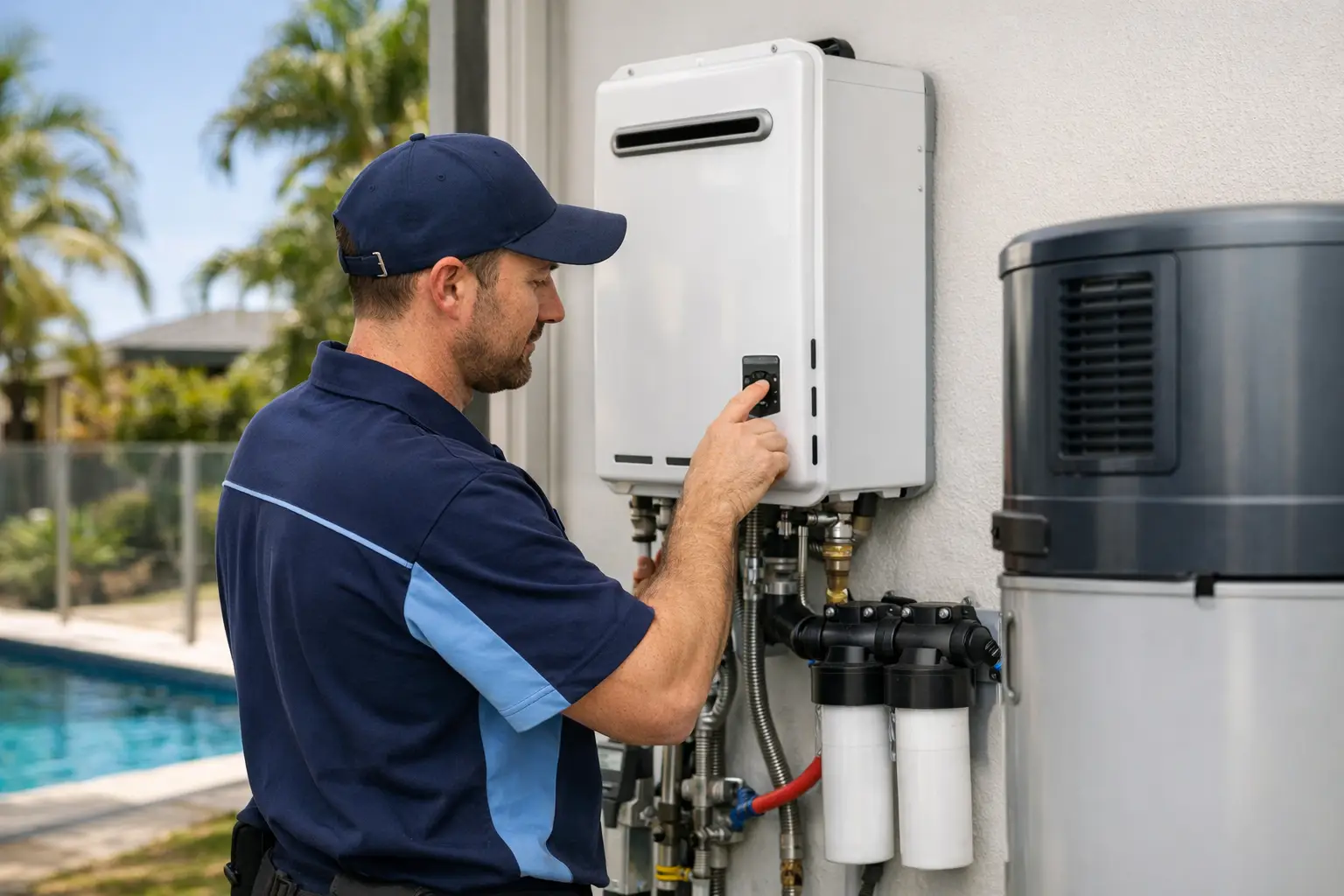
A cold shower after the school run or before work is usually when a hot water system gets your full attention. In this instant gas hot water review, we look at whether a continuous-flow gas system is a smart replacement for an ageing storage tank, and what needs checking before you book the installation.
For many Gold Coast, Southern Brisbane and Tweed households, instant gas hot water makes a lot of sense. It heats water only when you turn on a tap, does not require a large tank taking up space, and can keep supplying hot water for as long as there is gas and water pressure. But it is not automatically the best choice for every home. Your household size, existing gas supply, bathroom layout and how often several people use hot water at once all matter.
Instant Gas Hot Water Review: The Main Benefit
An instant gas hot water system, also called a continuous-flow system, does not store a tank of pre-heated water. When you open a hot tap, cold water flows through a heat exchanger and gas burners heat it as it passes through. Close the tap and the burner stops.
That simple difference is the reason these systems are popular. A storage unit continually loses some heat through the tank, even when nobody is using hot water. Continuous-flow units avoid much of that standby energy loss. If your household has irregular routines, long workdays or changing numbers of people at home, heating water only as needed can be particularly practical.
The other big advantage is recovery. A storage tank has a fixed amount of hot water. Once it is used, you may need to wait for it to reheat. A correctly sized continuous-flow unit can support back-to-back showers without that wait.
There is also a space benefit. Most units are wall-mounted outdoors, freeing up the area where an old tank sat. That can be useful beside a laundry, on a narrow side passage or when renovating.
Where Instant Systems Can Fall Short
The word “instant” can create the wrong expectation. Water is heated immediately inside the appliance, but it still needs to travel through your pipes. If the ensuite is at the other end of the house, you may still wait a little while for hot water to reach the tap.
Flow rate is the most important trade-off. A system can provide hot water continuously, but only up to its rated capacity. If two showers, the washing machine and kitchen tap run together, the temperature or pressure at a shower may drop if the unit is undersized. Choosing the cheapest or smallest model can lead to frustration at the busiest time of day.
Continuous-flow systems also rely on power for electronic ignition and controls. During a power outage, most standard units will not operate, even if your LPG bottles are full. Homes that need hot water during outages should discuss suitable backup options as part of a broader home power plan.
Finally, installation can be more involved than a straight tank swap. The existing gas line may not have the capacity for a high-demand hot water unit, especially where it also supplies a cooktop or gas fire. Pipe sizing, water pressure, location, flue clearances and electrical connections all need to be assessed by licensed professionals.
Is an LPG Continuous-Flow System Cheaper to Run?
It depends on what you are replacing and how your household uses water. An efficient instantaneous LPG system can reduce energy wasted keeping a tank hot all day. That can be a worthwhile saving for a couple, a smaller household, or a family whose hot water use is spread across the day.
For larger families, the result depends more heavily on habits and unit size. Long showers, high-flow shower heads and several bathrooms in use at once increase gas consumption regardless of the hot water system type. A continuous-flow unit is not magic – it simply gives you more control over when energy is used.
Your LPG supply also matters. Running out of gas means no hot water, cooking or gas heating where those appliances are connected. A reliable delivery arrangement and enough bottle capacity help prevent avoidable disruptions. It is worth asking whether your current bottle setup suits the combined demand of a new hot water system and the rest of your home.
When comparing quotes, look beyond the appliance price. A fair quote should explain the model, hot water capacity, installation work, any gas line upgrades, valves, electrical work and removal of the old unit. A lower upfront price can become less attractive if essential work appears as an unexpected extra later.
Choosing the Right Flow Rate for Your Home
Manufacturers commonly describe continuous-flow capacity in litres per minute. A higher number generally means the system can heat more water at the same time, but the right unit is not always the biggest available.
A one-bathroom home with one or two occupants may be well served by a lower-capacity unit. A family home with two bathrooms often needs more capacity, particularly if morning showers overlap. Homes with large rain showers, a deep bath or a frequent need to run several outlets together should be assessed carefully.
The temperature of incoming water also affects performance. In cooler weather, the system has to raise the water temperature further, which can reduce the volume it can deliver at your chosen temperature. This is why an experienced installer will ask about your bathrooms, appliances, household size and usage patterns rather than recommending a model based on bedroom numbers alone.
A quick reality check before you replace your system
Think about the most demanding 15 minutes in your home. Is someone showering while another person is washing up? Do teenagers take back-to-back showers? Does the washing machine run in the morning? Those ordinary routines tell you far more about the capacity you need than a brochure does.
If your current storage tank regularly goes cold, you may need a better-sized system rather than simply a different technology. On the other hand, if you rarely use more than one outlet at a time and value reclaimed space, continuous flow can be an excellent fit.
Installation Details That Should Not Be Skipped
Hot water installation is not a DIY job. Gas and plumbing work must be completed safely and in line with applicable requirements. The unit location needs adequate clearance from openings, vents and boundaries. Some models require specific flue arrangements, while condensing units may need a suitable drainage point.
The installer should also check the water pipes, isolation valves and tempering arrangement. Tempering controls help deliver safer water temperatures at bathroom outlets while allowing the system to operate efficiently. If your home has older plumbing or inconsistent water pressure, these details can affect everyday comfort.
For an LPG property, confirm that the bottles, regulator and gas pipework can support the new appliance. A gas fitter who understands the whole setup can identify a restriction before it becomes a no-hot-water problem. That is particularly valuable when a hot water upgrade is combined with a new cooktop or gas fire.
Outdoor installation is common because it simplifies ventilation and saves indoor space. If you need an indoor installation due to layout or weather exposure, model selection and flue design become even more important. Do not assume every unit can go in every location.
Our Verdict on Instant Gas Hot Water
An instant gas hot water system is a strong option for households that want continuous hot water, less wasted energy between uses and more space around the home. It is especially appealing when replacing a tired storage tank or when a renovation calls for a neater layout.
The key is matching the system to real demand. A well-sized unit with properly checked gas supply and professional installation can feel like a major upgrade. An undersized unit or rushed installation can create pressure, temperature and capacity problems that no brand name will fix.
Before you choose, ask for a clear assessment of your household’s peak demand, your existing LPG setup and the full installation scope. For homeowners who want one local team to manage gas supply, hot water and related home services, No Hassle Homes can help make that decision simpler. The best system is the one that keeps your household comfortably supplied without creating a new headache later.